Quite Rational Indeed Mate!
I’m going to take you back to the Go-Go 90’s. What a great time that was to be in the prime of life in these United States. The 1990’s became known as the “Me” decade for a reason. It was all about “me”, us, and we. Never was it about them, those guys, or their stuff. No individualism and self-serving and add in some flash and bang and you had the recipe for living in the United States during this decade. We were “Yuppies”, and we were young, upwardly mobile professionals who wore that title proudly. Life was like one big festival everyday until something happened. One day in early December of 1996 then Federal Reserve Chairman Alan Greenspan tried spoiling the party by speaking [probably his most famous quote]. Greenspan said after a rate-setting meeting of the Federal Reserve effectively that U.S. investors were suffering from a case of “Irrational Exuberance”. Suddenly this quote was all over the newspapers and aired on television that the head of the Federal Reserve thinks investors are wrong about this market, [the stock market]. His comment was addressing the bull market in equities explicitly. The height reached by the major indexes at that time, the Dow Jones Industrial Average, the S&P 500 and the NASDAQ indexes were too high, and totally unjustified in Greenspan’s mind. Hmmm. I remember at the time thinking that maybe he was right but no information I was privy to necessarily pointed to something being necessarily “irrational”? But again I knew I didn’t have all the information either, no one except the attendees of that board meeting knew all that was to be known regarding the matter at hand. So life went on, and if I remember correctly this comment resurfaced time and again as it was the subject of debate amongst those managing money for quite some time.
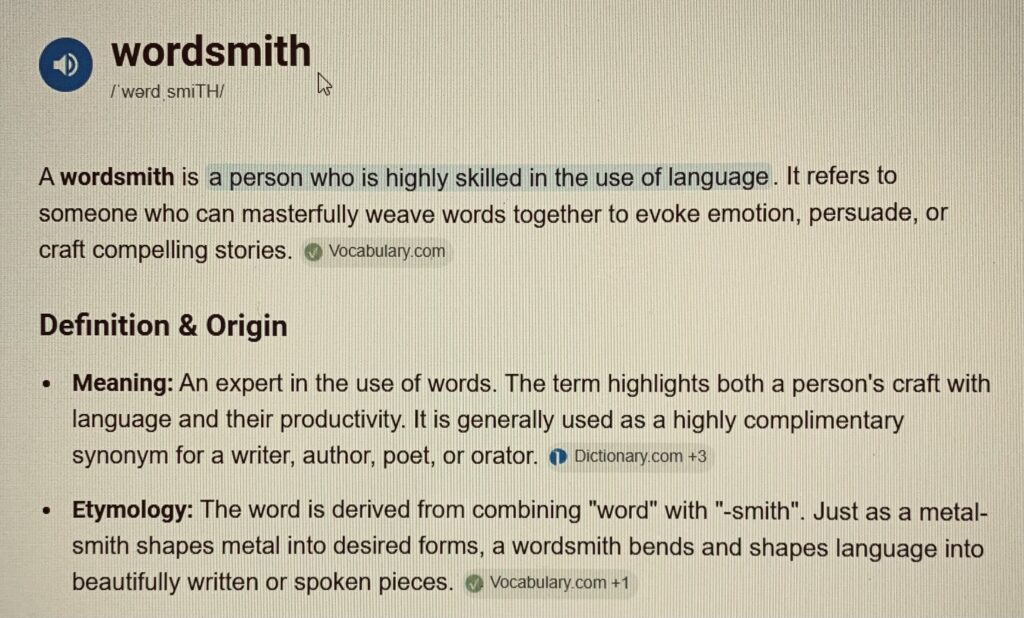
About Greenspan’s Wordsmithing
Alan Greenspan had two degrees in Economics that he earned – both a Bachelor and a Master’s Degree in the subject from prestigious schools. However, Mr. Greenspan was really a musician turned Economist who played the Clarinet in a jazz band before becoming any Economics aficionado. New York’s Stern School of Business awarded him with an honorary doctorate for his work in Economics as Chair only many years later, but again this accolade was “honorary”. Greenspan served a total of five terms as Chairman of the Federal Reserve. He was considered most effective during his reign. I would describe him as competent although many times I felt that he had a tendency to keep short term rates a bit high, monetary policy was a little too tight in my mind during much of Greenspan’s long reign. But one had to go back to the economic landscape at the time to discern whether my argument had legs, or not. Under Reagan the U.S. economy underwent what became a multi-decade change from a manufacturing driven economy to one dominated by service sector jobs as we began to farm out the making of just about every friggin’ thing excepting food and energy. This trend lasted for about 50 years as I’m certain you’re well aware. We’re only making inroads in unwinding that trend today given this second Trump Administration. When you’re not making anything and you have to import almost everything you want the dollar to stay relatively strong against those countries who are making your stuff thereby you effectively can import dis-inflation. Greenspan’s higher short term rates accomplished that [for a time anyway] so I can’t argue there. Other than Greenspan’s ridiculous use of symbolism in the English language where everything he said had to be read under a microscope I had no other issues with his commanding the top spot at the Federal Reserve. However, again, his use of “wordsmithing” could sometimes be a nuisance for most of us folks who were managing portfolios for private clients at that time.
More on the Federal Reserve Chair
First let’s return to the day that Alan Greenspan as Chairman of the Federal Reserve first used the term “irrational exuberance” in describing U.S. financial markets:
“Clearly, sustained low inflation implies less uncertainty about the future, and lower risk premiums imply higher prices of stocks and other earning assets. We can see that in the inverse relationship exhibited by price/earnings ratios and the rate of inflation in the past. But how do we know when irrational exuberance has unduly escalated asset values, which then become subject to unexpected and prolonged contractions as they have in Japan over the past decade?”
Looking back after his quote, the “dotcom bubble” burst about four years later. I really want to say that even though it’s become known as the dotcom bubble, the entire U.S. stock market dropped whether you were invested in technology shares or not. What precipitated was a three year long overall bear market in U.S. stocks. Some things were clear from this rhetoric, Greenspan was not a fan of lower interest rates nor was he much invested in equities. His holdings were described as a large bond portfolio so I’m guessing fixed income was his personal investment style. He’s correct in saying that near-zero interest rate environments do precede all kinds of speculative investment activities, crypto-currencies were born out of a “zero interest rate” environment, so always keep that in mind.
U.S. Financial Markets Transformed the “Irrational” into Something Quite “Rational!”
Stock prices move around in a cyclical fashion, always have, always will. When you invest in stocks the ride begins and it can be exuberant and it also can be bumpy from time to time. Nothing stays quite the same when placing money in equities in hopes of someone later willing to pay you more than what you paid for the position. However, below is something I found [quite] fascinating. All we have to do is fast-forward 29-1/2 years after Greenspan’s famous quote regarding overpriced stock markets to today to see what’s actually occurred:
The Dow Jones Industrial Average Closed December 5, 1996 @ 6,437.10, today it’s trading around 51,668.57. That’s a gain of more than 8 times, or 800%!
The S&P 500 Index Closed December 5, 1996 @ 744.38, today it’s trading around 7,471.08. That’s a gain of more than 10 times, or 1,000%!
The NASDAQ Composite Index Closed December 5, 1996 @ 1,300.12, today it’s trading around 26,185.52. That’s a gain of more than 20 times, or 2,000%!
Key Take-Aways
Individual stocks? Who needs stocks when you can invest in indexes right? Look how these three largest indexes have performed over a long stretch of time. Most of us don’t even need to invest in individual issues when we may be able to obtain exceptional performance in a more diversified index product. If you don’t have a considerable time horizon then don’t invest [that portion of your assets] in equities in the first place. For those that remained invested, they are retiring in comfort right now.